
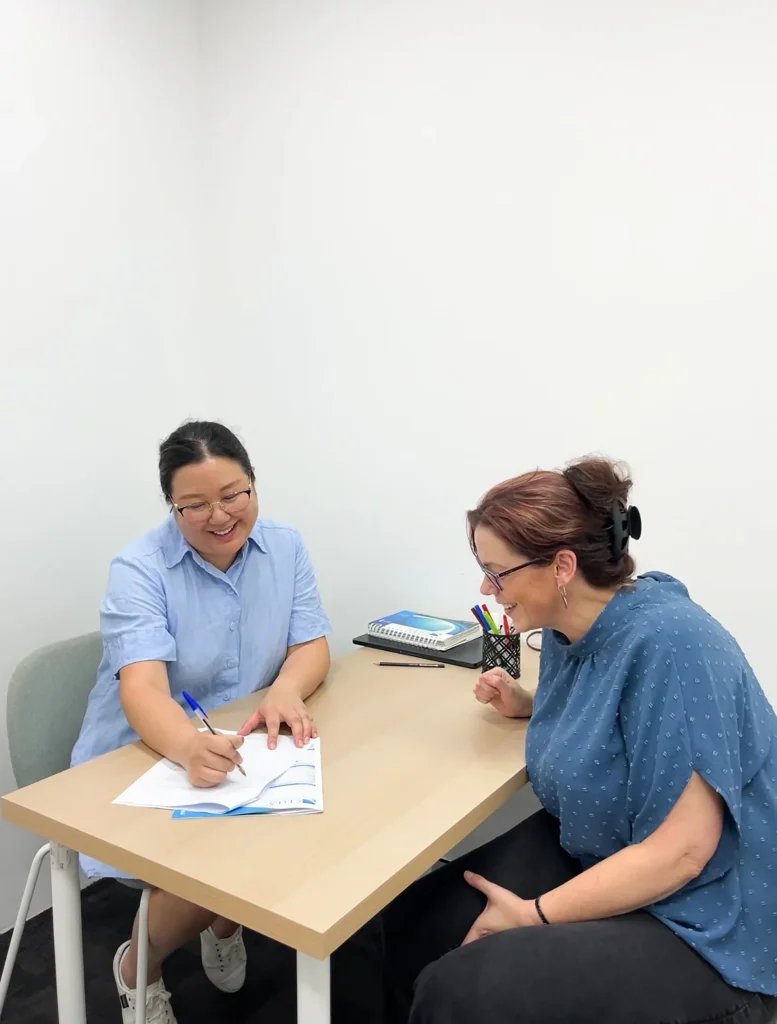
What are speech therapy assessments?
Speech therapy assessments are sessions where therapists look at how someone communicates in real life. They explore strengths, challenges and support needs, and help tailor therapy with the formation of goals.
Who assessments are for
Assessments are for people across the lifespan — from children and teens to adults.
How assessments are done
Assessments are personalised, based on each person’s communication style and needs. This can include:
- Standardised testing tools
- Play-based speech and language observation
- Conversations and interviews with carers or teachers
The approach varies depending on age and needs, with play-based methods often used for younger children and more targeted language tasks for older clients.
Bilingual assessments
The team includes speech pathologists who speak multiple languages. We assess communication in more than one language when possible and see bilingualism as a strength.
What communication areas might be assessed
Assessments may look at:
- Understanding and using language
- Speech clarity
- Expression of emotions
- Play skills (for children)
- Social communication, including non-verbal cues
- Everyday communication challenges and strengths
Common questions about assessments
Do we need an assessment?
An assessment helps speech pathologists understand how someone communicates so therapy can be focused and meaningful.
How long does it take?
Assessments typically take about 60–90 minutes, depending on what areas need reviewing.
Will I get a report?
Yes — a detailed assessment report is provided. You can share this with schools or other professionals, and it helps shape the therapy plan and goals.
Do you assess clients without a diagnosis?
Yes — we work with both diagnosed and undiagnosed clients. While we don’t make medical diagnoses like Autism Spectrum Disorder, our detailed assessment results can help other professionals involved in diagnosis.
What to expect next
If you have concerns about your or your child’s communication skills, our team will listen to your goals, explain the findings clearly, and offer practical recommendations you can use at home or in everyday life.