
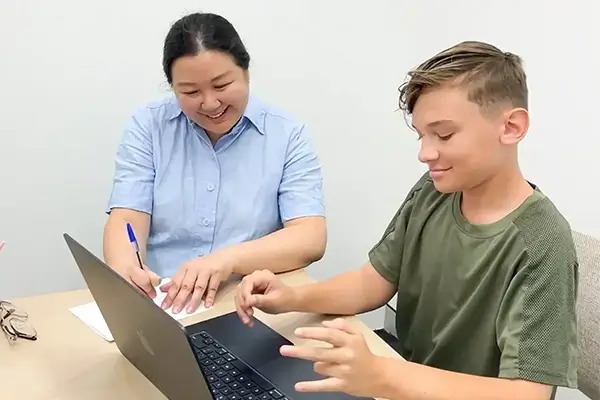
What is speech therapy for Autism Spectrum Disorder?
This service supports autistic children, teens and young adults to build meaningful communication and everyday connection. Therapy is respectful, neuro-affirming and tailored to each person’s experience and goals.
Who this therapy is for
Speech therapy is available for autistic individuals of different ages — from toddlers to young adults. The focus and activities are adjusted based on age and needs: play-based communication for younger clients, and social communication for older clients.
What the therapy focuses on
Therapy sessions often include support in areas like:
- Communication skills
- Emotional regulation
- Play and social skills development
- Everyday functional communication
- Augmentative and Alternative Communication (AAC)
- Understanding body language and social awareness
- Language and speech sound skills
- School and community participation
- NDIS-aligned communication goals
These align with broader goals, such as helping people express wants and needs, understand others’ communication, and build social interaction skills — whether through spoken language, gestures, pictures or technology.
Socle’s approach
- We take a neuro-affirming approach, valuing strengths, supporting sensory needs and encouraging each person to communicate in ways that feel natural to them.
- Therapy might include strategies like DIR/Floortime (relationship-based play) and practical techniques families can use at home or school.
- We encourage involvement of parents and carers so that skills transfer outside of speech therapy.
- Bilingual and culturally sensitive support is also available.
This reflects good practice in autism speech therapy — where plans are tailored to individuals, and goals are functional and meaningful in daily life.
Common questions answered
We can help you find answers to topics like:
- Options for autistic teens and young adults.
- What “neuro-affirming” therapy means (therapy that respects identity and encourages autonomy).
- How parents and caregivers can be involved
- NDIS communication goals and reporting.
- Support in educational settings like day care, preschool and school.