
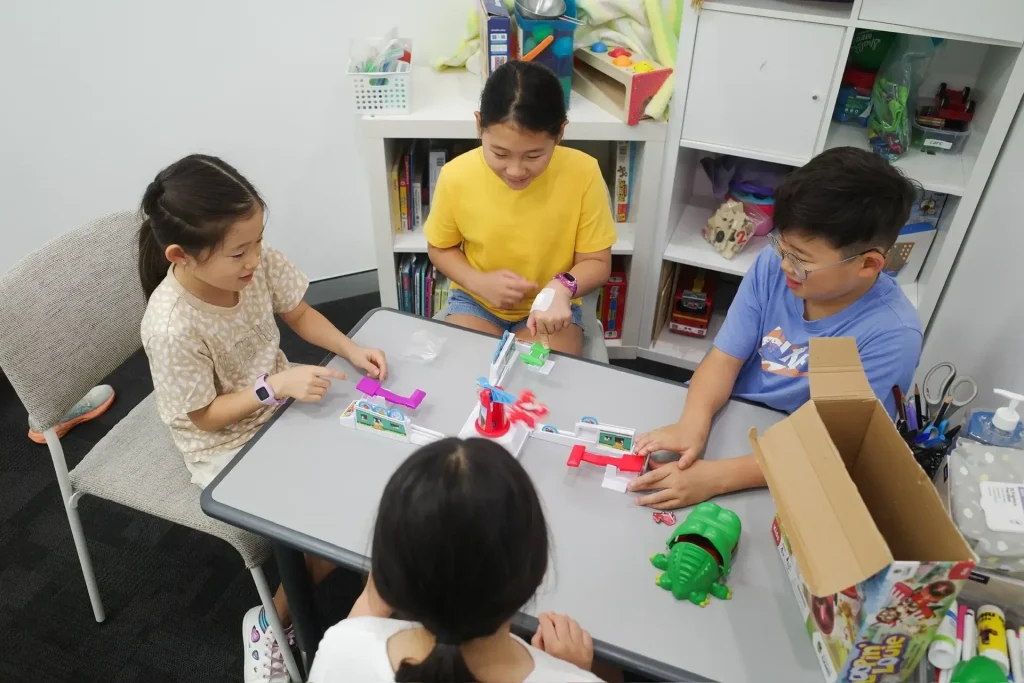
What is group therapy?
Group therapy programs give people practical, supported chances to grow their communication and everyday skills alongside others. Sessions take place in a safe, inclusive environment where confidence and connection are nurtured.
Who group therapy is for
Group therapy can support:
- Children — developing social skills, play and everyday communication.
- Teens and young adults — practising functional communication and life skills like ordering food, asking for help, teamwork and community participation.
Groups are tailored so that participants with similar ages and communication goals can work together.
How group therapy works
- Sessions usually run weekly or fortnightly during school terms, about 45–60 minutes long.
- Groups are kept small to help everyone feel comfortable and engaged.
- Activities may include games, role-play, team tasks or community outings, depending on the group’s purpose.
- Intensive group programs also run during school holidays — these are longer sessions over a few days for intensive practice.
What groups focus on
Group therapy at Socle helps people practise communication in real life-like situations — for example:
- Joining in play and social interactions
- Building confidence in communication
- Everyday life tasks and community participation
- Functional skills for young adults like preparing for work
Sessions are planned with clear goals but stay flexible to meet individual needs.
How it feels and why it helps
In groups, participants get to interact with peers, practise communication in natural settings, and build confidence as they share experiences. Skilled therapists or therapy assistants support interactions gently and intentionally so people feel respected and comfortable practising their skills.
Common questions answered
Can you try a session?
It’s possible to have a (paid) trial session before committing to a full term so families can see if a group is a good fit.
Can group therapy support NDIS goals?
Yes — group therapy can be used to work towards communication goals funded through NDIS, with reports available for plan reviews.
Does a diagnosis need to be in place to join?
No. A diagnosis isn’t required — support is offered based on communication and participation needs.